Part of the Minnesota Graduation RatesET series.
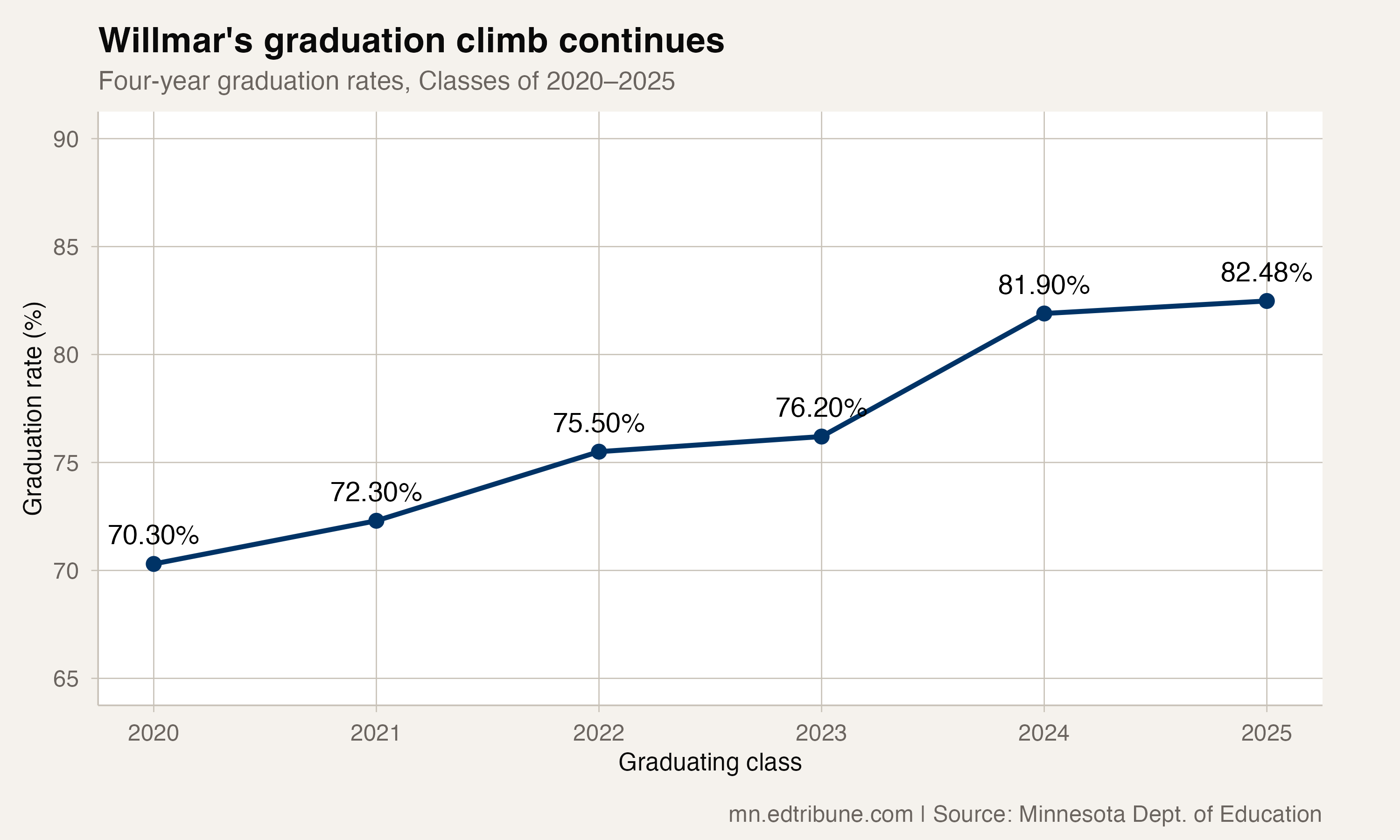
Willmar Public School District↗ET extended its graduation-rate climb into the Class of 2025. Its four-year rate reached 82.48%, up from 81.9% for the preceding class and 70.3% for the Class of 2020.
That is five consecutive annual improvements across six graduating classes. Willmar was the only district to improve at every transition among 399 district reports with complete, finite rates for the Classes of 2020 through 2025. This comparison excludes districts with a missing year or an unpublished rate; it does not establish a record before the available period.
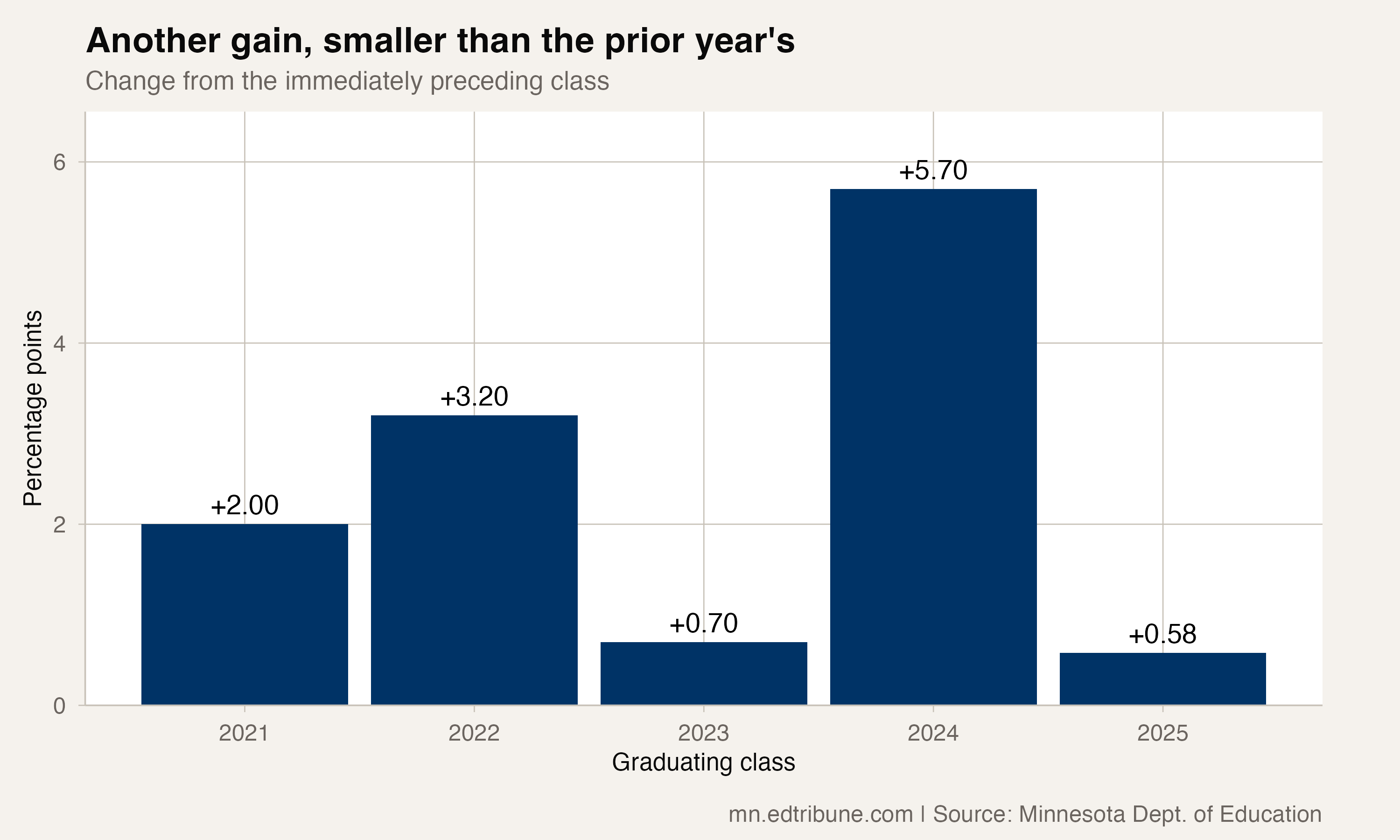
The total gain was 12.18 percentage points. The most recent increase, 0.58 points, was smaller than the preceding year's 5.7-point gain.
More graduates in a larger cohort
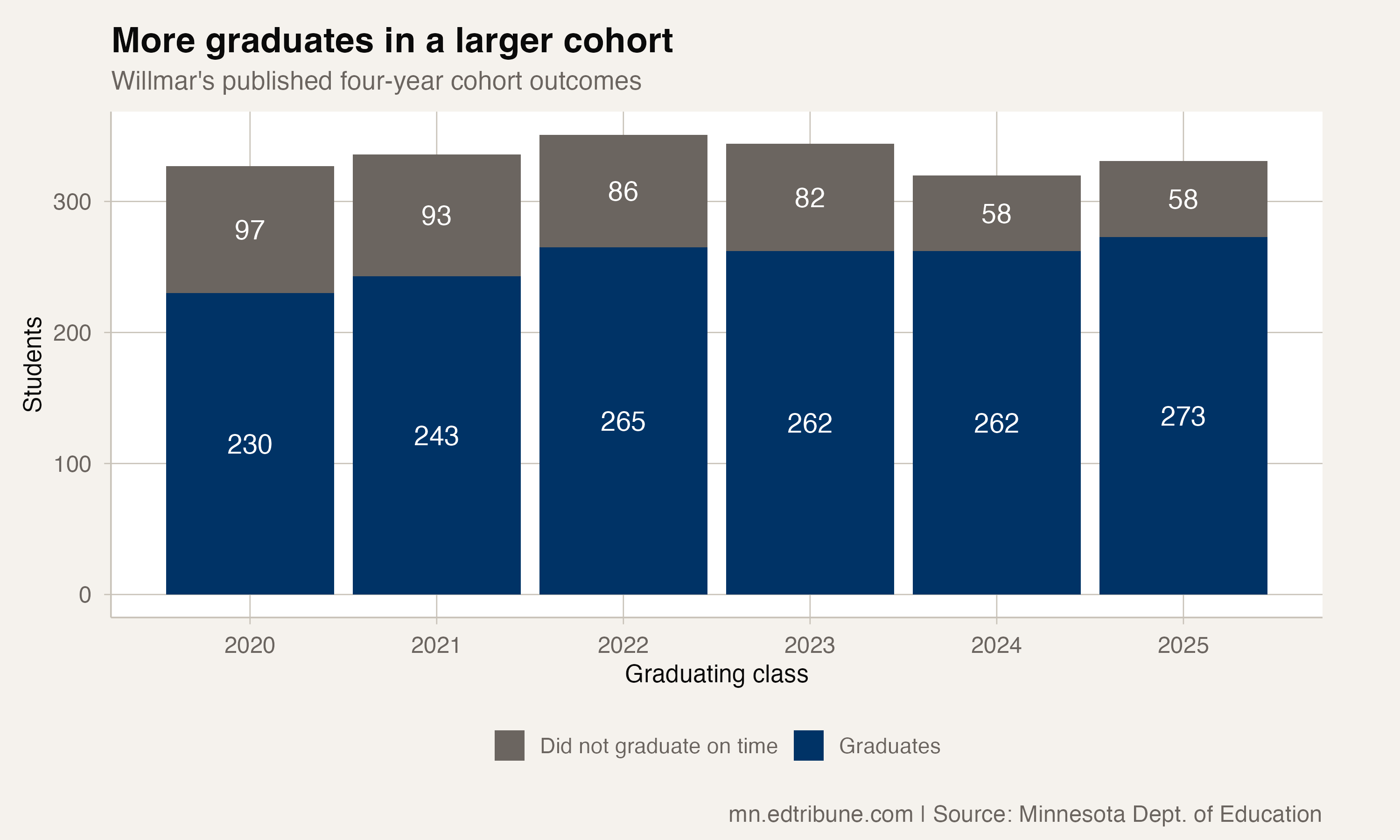
Willmar reported 273 graduates in a four-year cohort of 331 students for the Class of 2025, compared with 262 graduates in a cohort of 320 for the Class of 2024. Both counts increased by 11 students. The number who did not graduate on time remained 58.
That unchanged count includes students with different outcomes; it must not be described as a dropout count. The graduation figures measure completion within the cohort's four-year timeline.
The statewide comparison
Minnesota's published four-year graduation rate for the Class of 2025 was 84.94%. Willmar remained below that statewide rate despite its continued improvement.
The Minnesota Department of Education's graduation workbook explains that small student-group results can be suppressed. Those missing observations are excluded from the complete-history comparison rather than treated as zero.
The figures establish a sustained improvement over the observed classes. They do not identify which local programs produced it or predict the next class's results.
Detailed code that reproduces the analysis and figures in this article is available exclusively to EdTribune subscribers.
Discussion
Sign in to join the discussion.
Loading comments...