In 2021-22, 47.0% of Minneapolis↗ET Public Schools students were chronically absent. The published count was 14,147 students out of enrollment of 30,115.
That was the peak in the four-year state panel. Minneapolis moved from 33.8% in 2020-21 to 47.0% in 2021-22, then fell to 34.8% in 2022-23 and 31.7% in 2023-24.
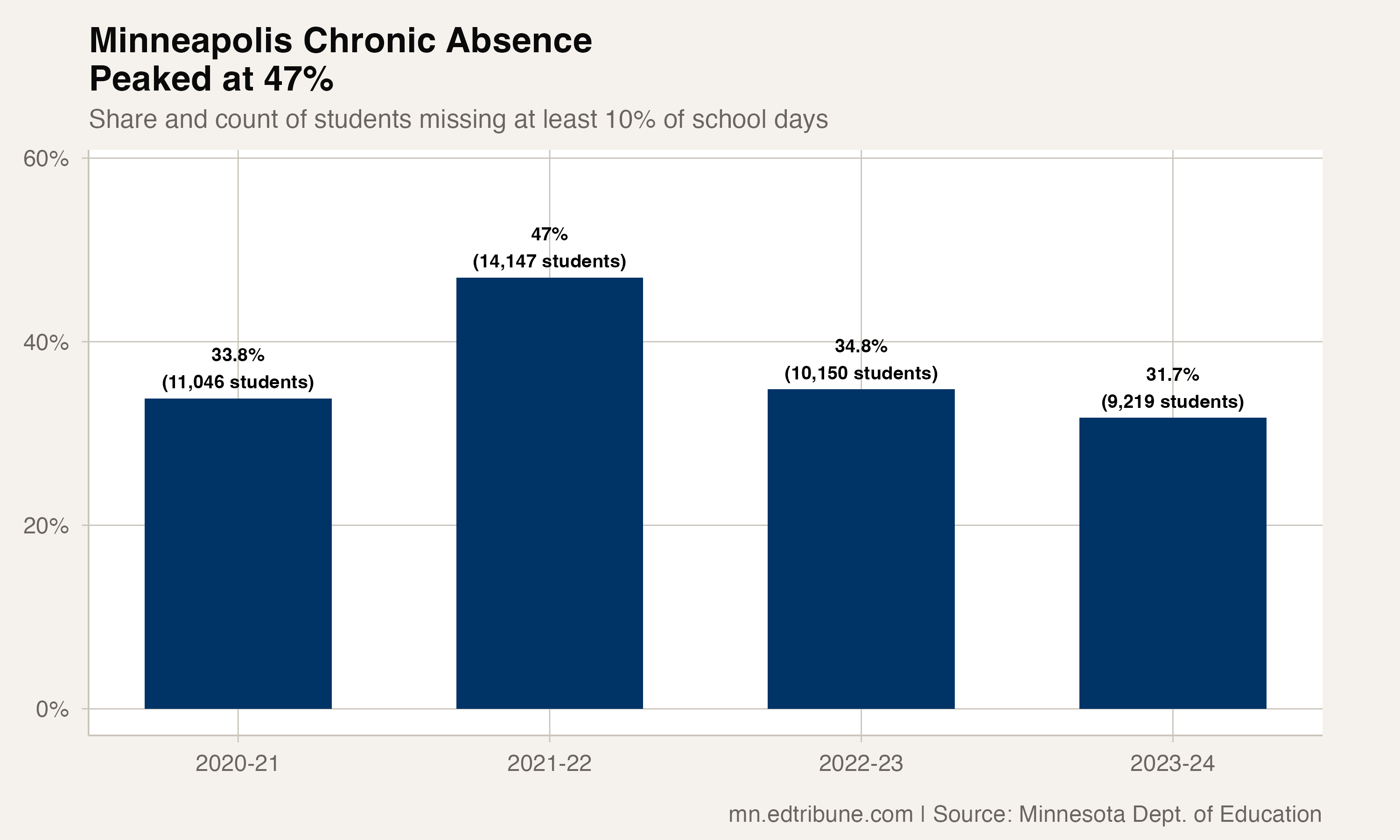
The 2023-24 result was 15.3 percentage points below the peak. It represented 9,219 chronically absent students among 29,063 enrolled students. Direct evidence: the rate and count improved for two consecutive reports after 2021-22. Unresourced: the state files do not establish why.
Minneapolis remained above Saint Paul and Minnesota
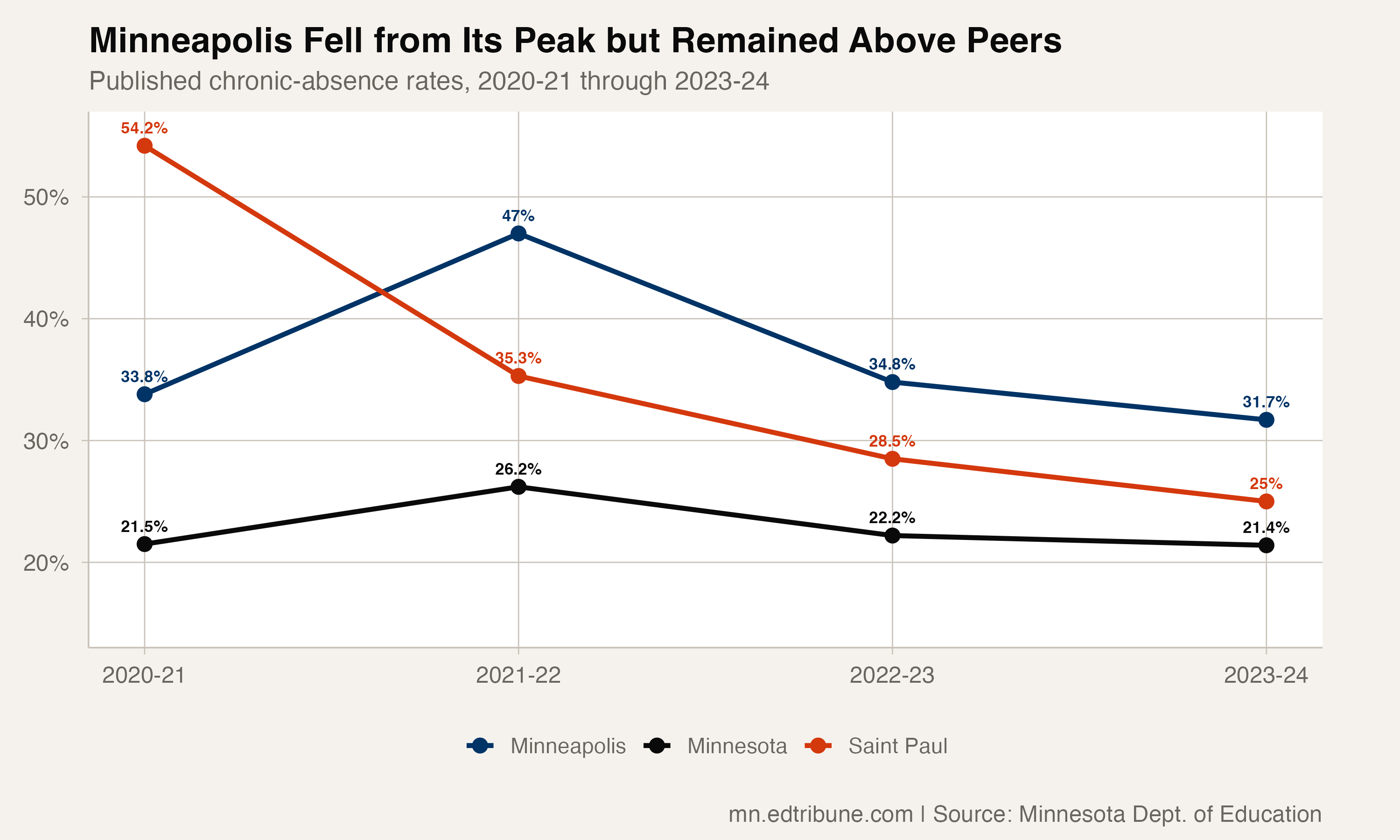
In 2023-24, Saint Paul↗ET reported 8,029 chronically absent students among 32,145 enrolled students, a 25.0% rate. Minneapolis's 31.7% rate was 6.7 points higher.
Minnesota's published statewide rate was 21.4% in the same year. Minneapolis was 10.3 points above that benchmark. Those are comparisons of published counts with published all-students enrollment totals; they are not demographic or causal explanations.
Enrollment fell, then rose
Minneapolis enrollment declined from 32,722 in 2020-21 to 29,063 in 2023-24, a decrease of 3,659 students. The enrollment series then rose to 29,928 in 2024-25 and 30,079 in 2025-26. The state chronic-absence package ends in 2023-24, so the later enrollment figures do not establish a later attendance trend.
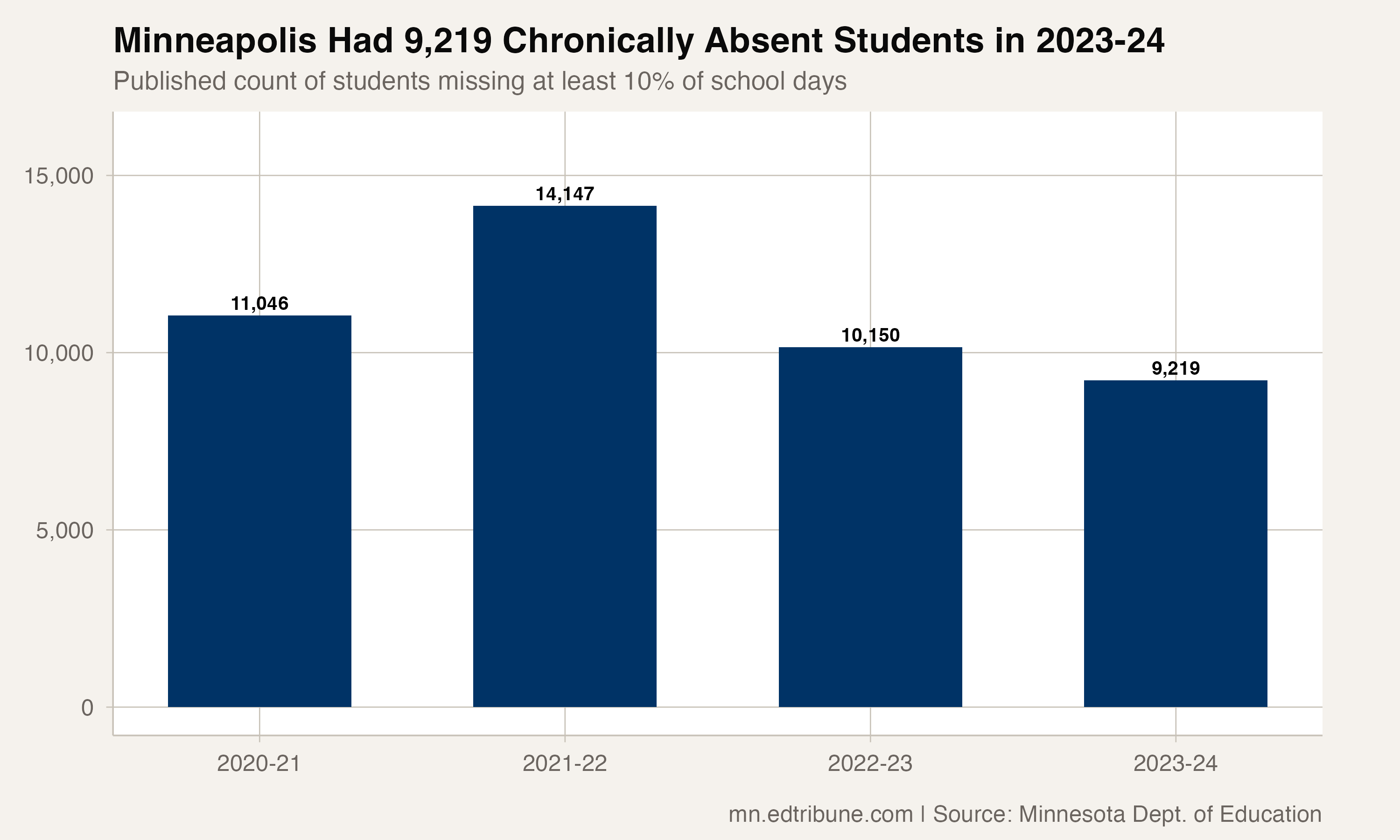
Minnesota defines chronic absence as missing at least 10% of school days. The state describes the inverse measure, consistent attendance, as attending more than 90% of school days.
Data source: Minnesota Department of Education absence and enrollment data.
Detailed code that reproduces the analysis and figures in this article is available exclusively to EdTribune subscribers.
Discussion
Sign in to join the discussion.
Loading comments...