Red Lake: Where Two-Thirds of Students Are Chronically Absent
Red Lake Public School District reported a 68.4% chronic absence rate, highest among Minnesota districts with at least 500 students.
Data-Driven Education Journalism for the North Star State
Education News & Data
Local education reporting from every corner of Minnesota, grounded in Minnesota Department of Education data.
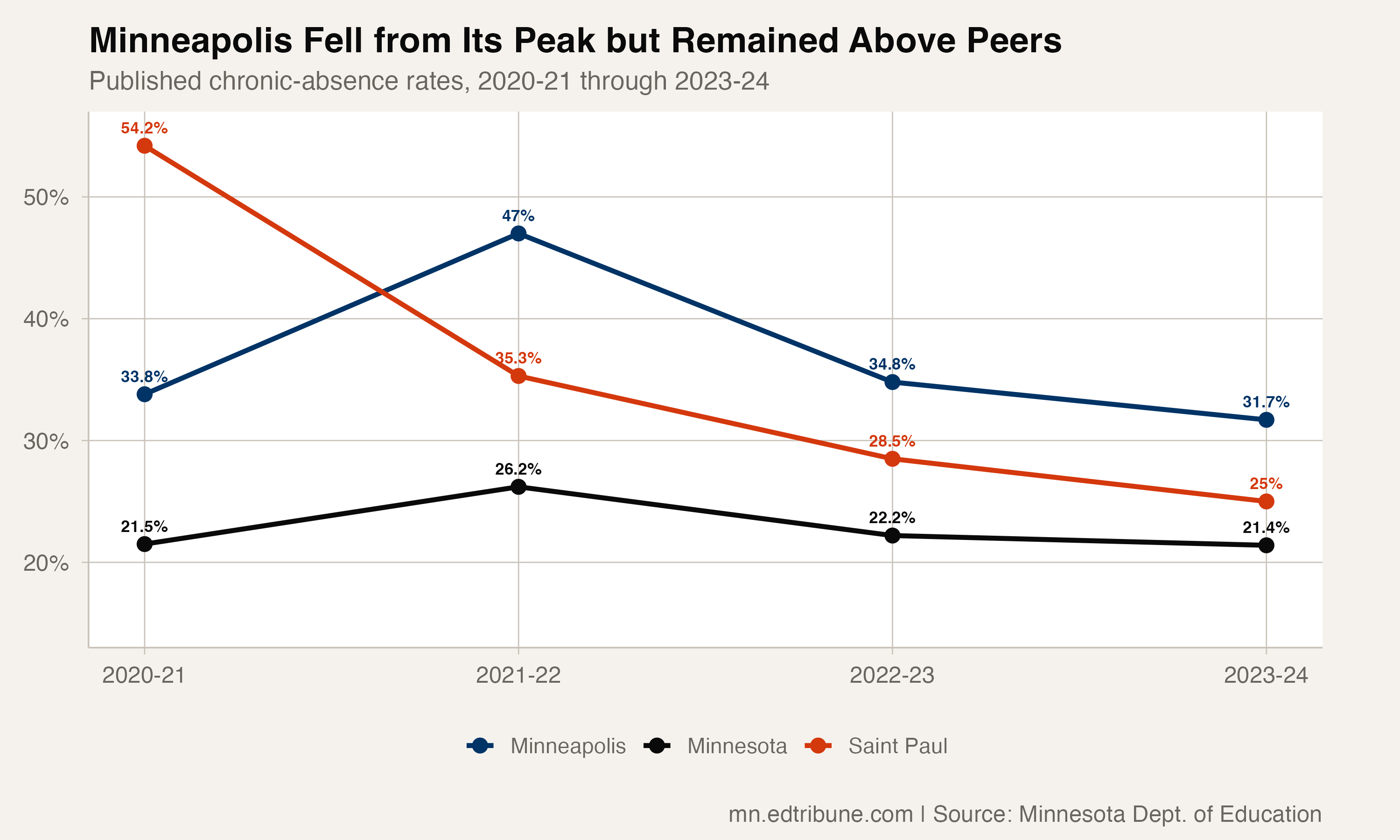
Minneapolis chronic absenteeism peaked at 47.0% in 2021-22 and fell to 31.7% by 2023-24, still 10.3 points above Minnesota.
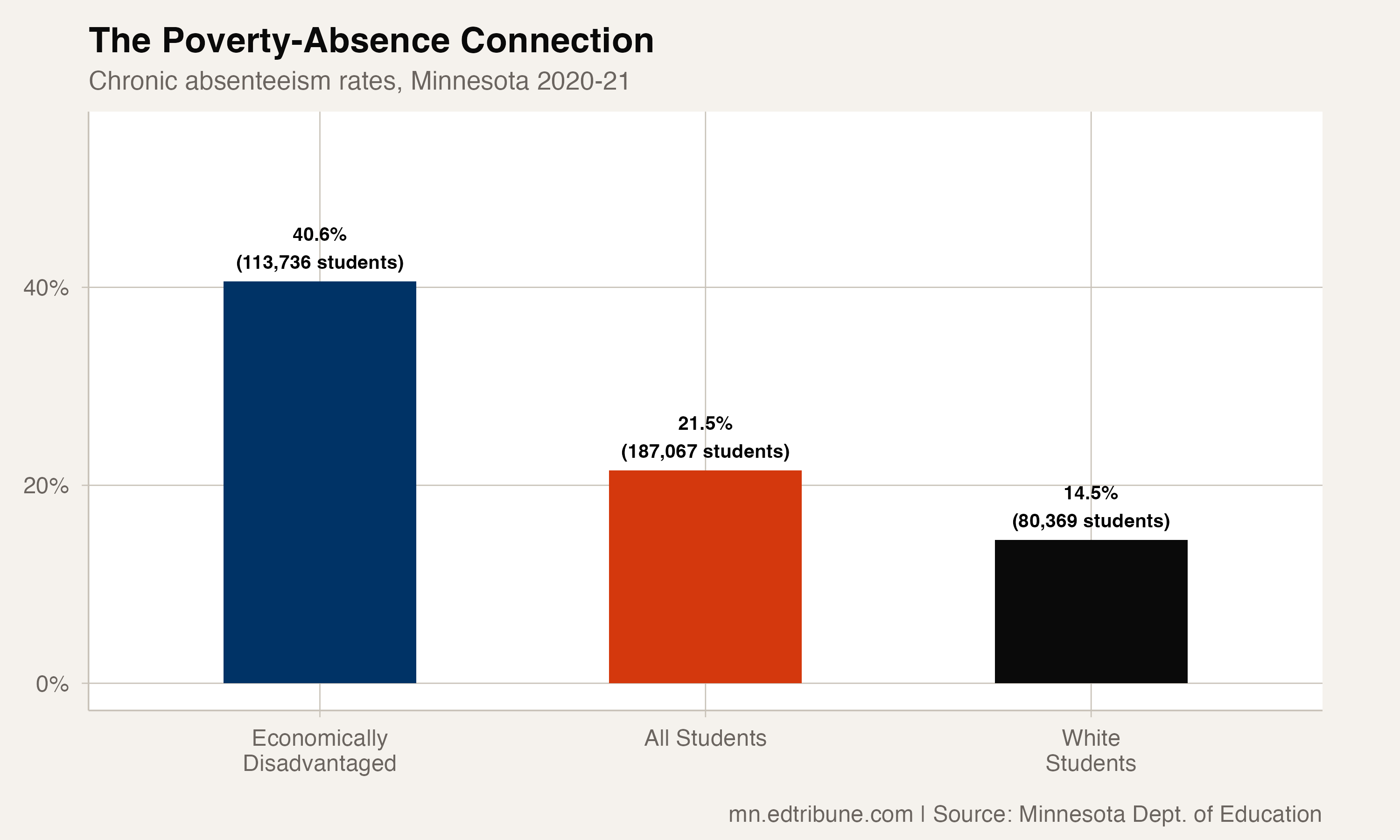
In 2020-21, 40.6% of Minnesota students eligible for free or reduced-price lunch were chronically absent, 19.1 points above the statewide rate; subgroup breakdowns are available only for that year.
Minnesota's chronic absence rate improved 0.8 points in 2023-24, while 28 of 295 strict four-year-panel districts reached highs.
Rochester's chronic-absence rate fell 8.9 points to 31.8%, narrowing its statewide gap while remaining highest among Minnesota districts above 10,000 students.
Red Lake Public School District reported a 68.4% chronic absence rate, highest among Minnesota districts with at least 500 students.
In Minnesota, 40% of Black students were chronically absent compared to 14.5% of white students -- a 25-point gap the state can no longer track because it stopped publishing subgroup data.
Minnesota hits four simultaneous grade-level records in 2026: all-time high pre-K and 12th grade, all-time low kindergarten and first grade.
Hastings is the only Minnesota district to decline every single year in the state's dataset. The 19-year streak has erased 1,118 students, 22% of enrollment.
Minnesota lost 130,507 white students since 2007 while every other racial group grew. White decline exceeds the state's entire net enrollment change.
A virtual campus run by Pearson now enrolls more students than any brick-and-mortar school in Minnesota. Online enrollment has tripled since COVID.
Black enrollment in Minneapolis Public Schools has fallen 47% since 2007, while white share rose from 28.5% to 36.4%. The shift is not gentrification adding students. It is Black and Asian families leaving faster.
Outer-ring Twin Cities suburbs gained 12,559 students since 2007 while inner-ring districts lost 7,248, reshaping the metro's enrollment geography.
Nearly one in five Minnesota students now receives special education services, up from one in seven in 2014, straining budgets despite a historic state funding increase.
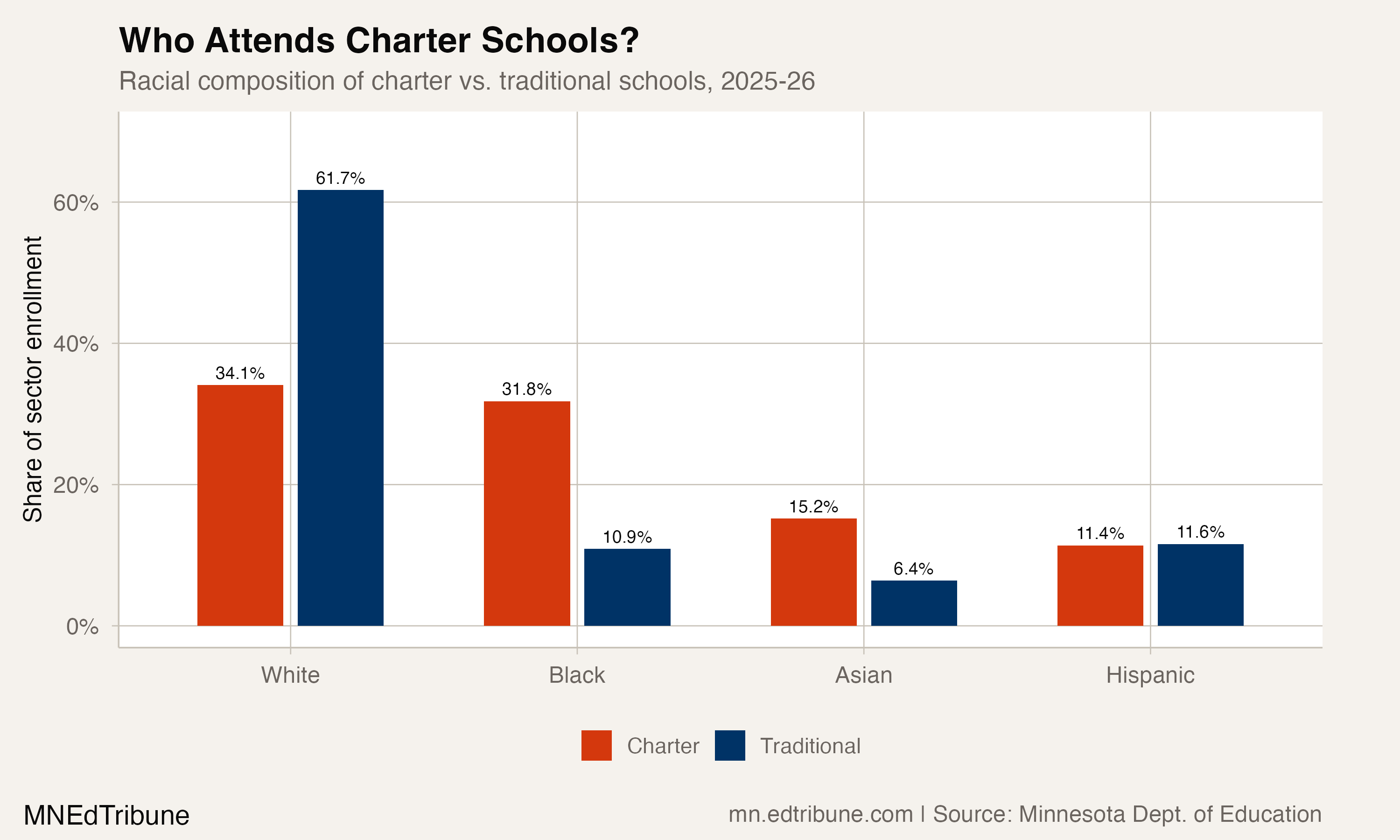
The state that invented charter schools 35 years ago saw its charter share stall at 8.3% in 2025-26, even as 76 of the 245 charters ever opened have closed.
St. Cloud's Black enrollment surged from 12% to 43% in 20 years, driven by Somali resettlement. The district now has more Black students than white.