Equity
Onamia's Graduation Rate Fell from 83% to 41.1% in Four Years
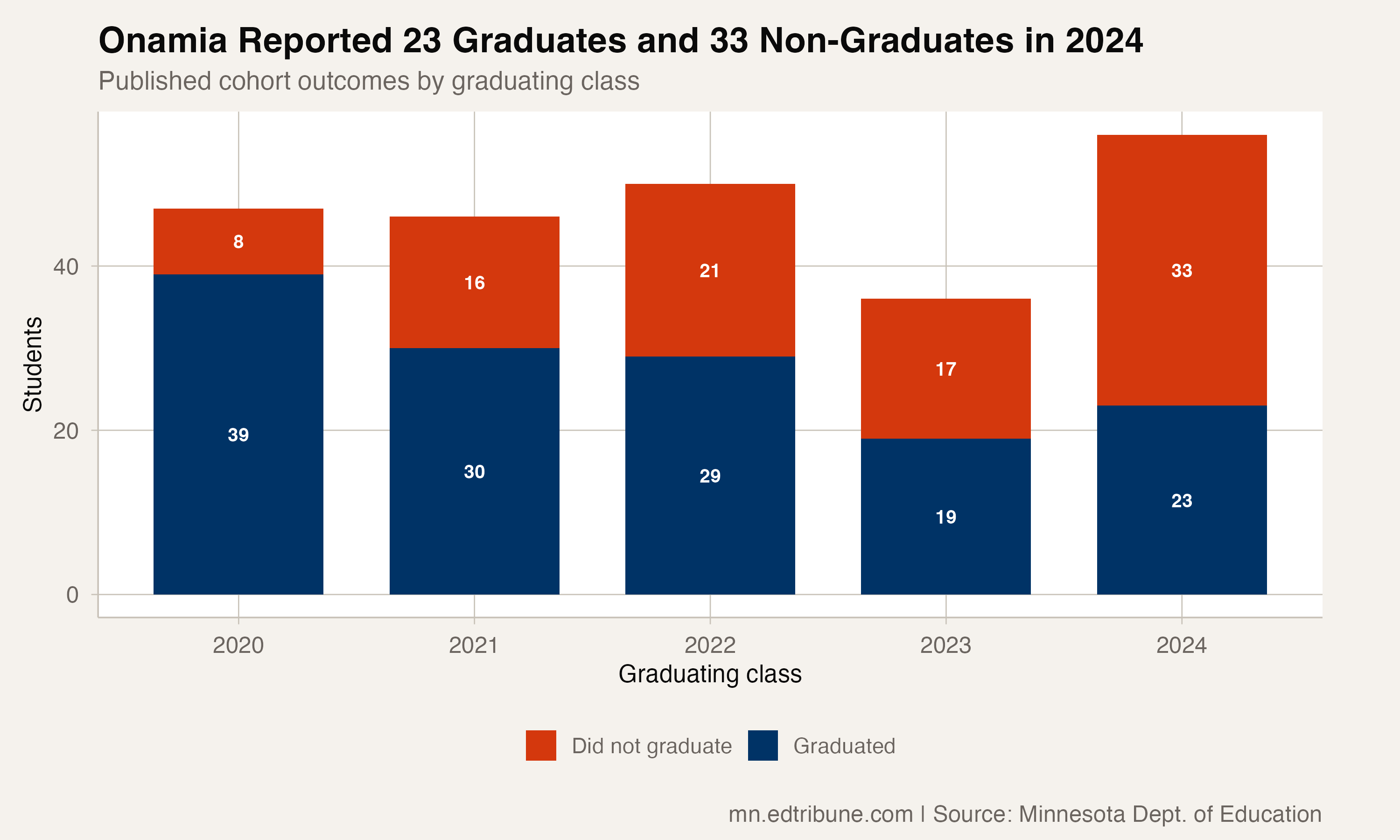
Onamia's published graduation rate declined in every year from 2020 through 2024, when 23 of 56 cohort members graduated on time.
Data-Driven Education Journalism for the North Star State
Page 2 of 3
Onamia's published graduation rate declined in every year from 2020 through 2024, when 23 of 56 cohort members graduated on time.
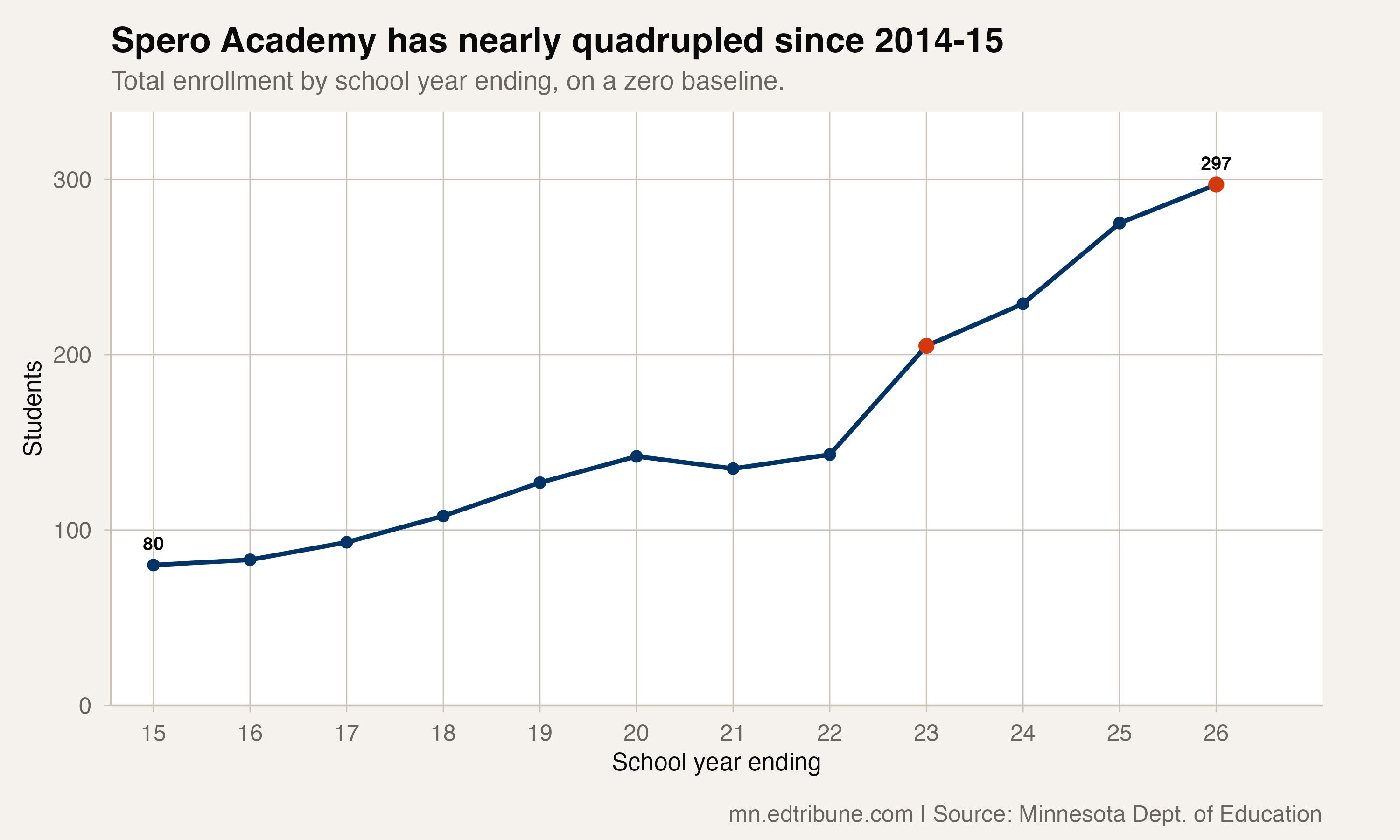
Spero Academy has nearly quadrupled since 2014-15. Almost all of the growth since 2022 is at a campus that did not exist before then, and its new executive director says he has run a two-campus school before.
Osakis has stayed inside a 71-student band for twelve years. Its new superintendent, who began her education in the district and whose children attend it, says that steadiness is what buys the school its small class sizes.

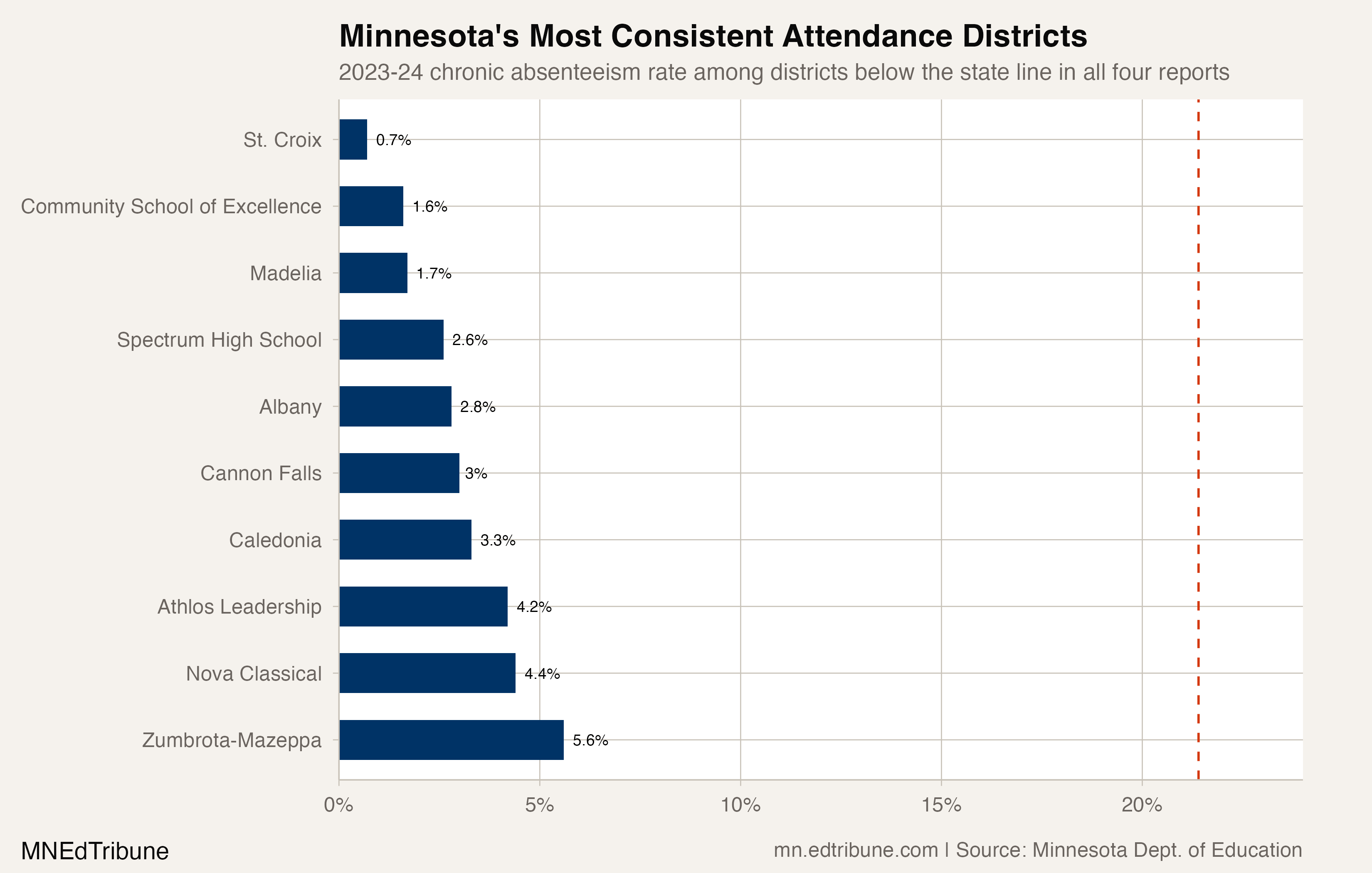
The earlier district attendance ranking used separate school-count and enrollment files without establishing a matching student population. That ranking is withdrawn.
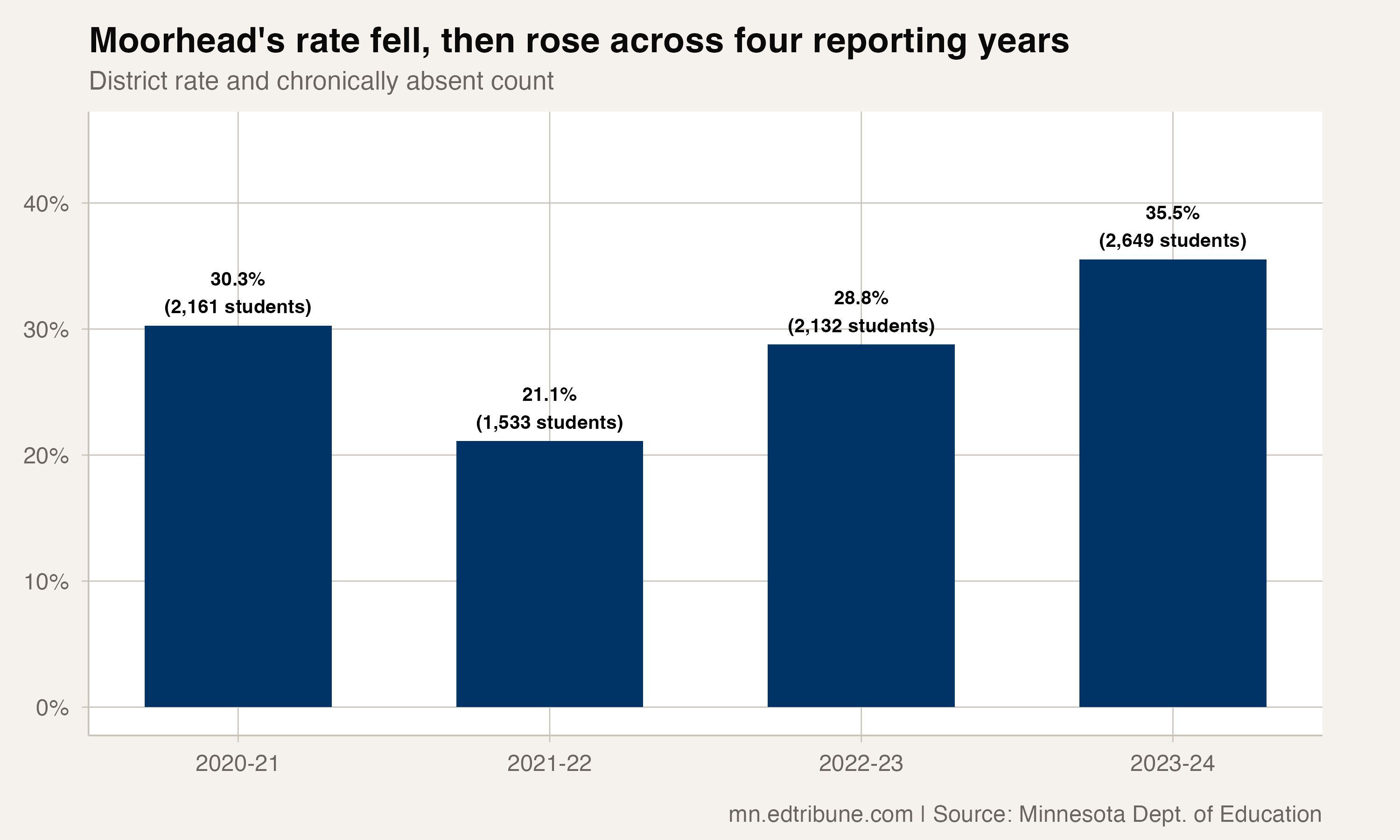
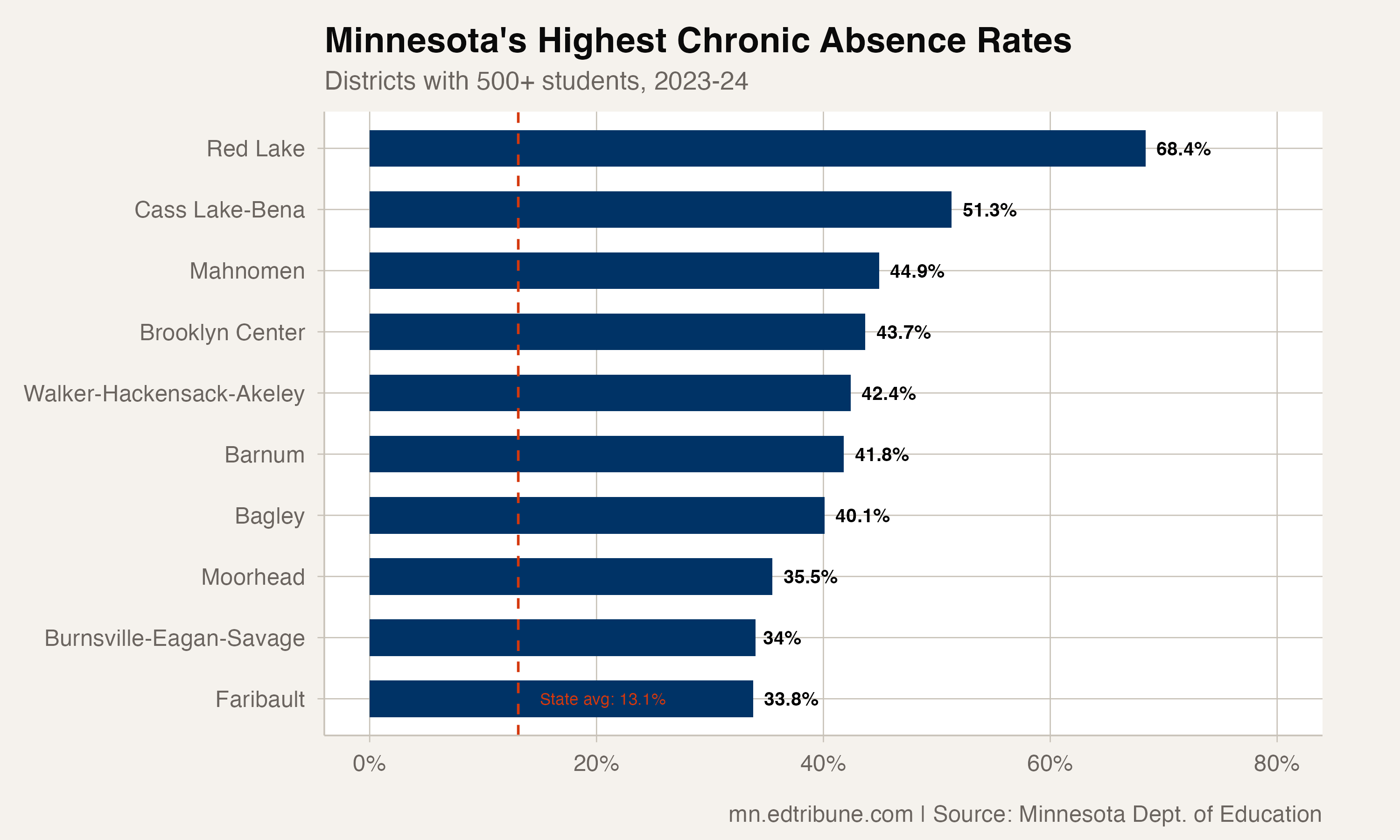
Moorhead's chronic-absence rate fell to 21.1% in 2021-22, then rose to 35.5% in 2023-24; Moorhead High School was at 65.4%.
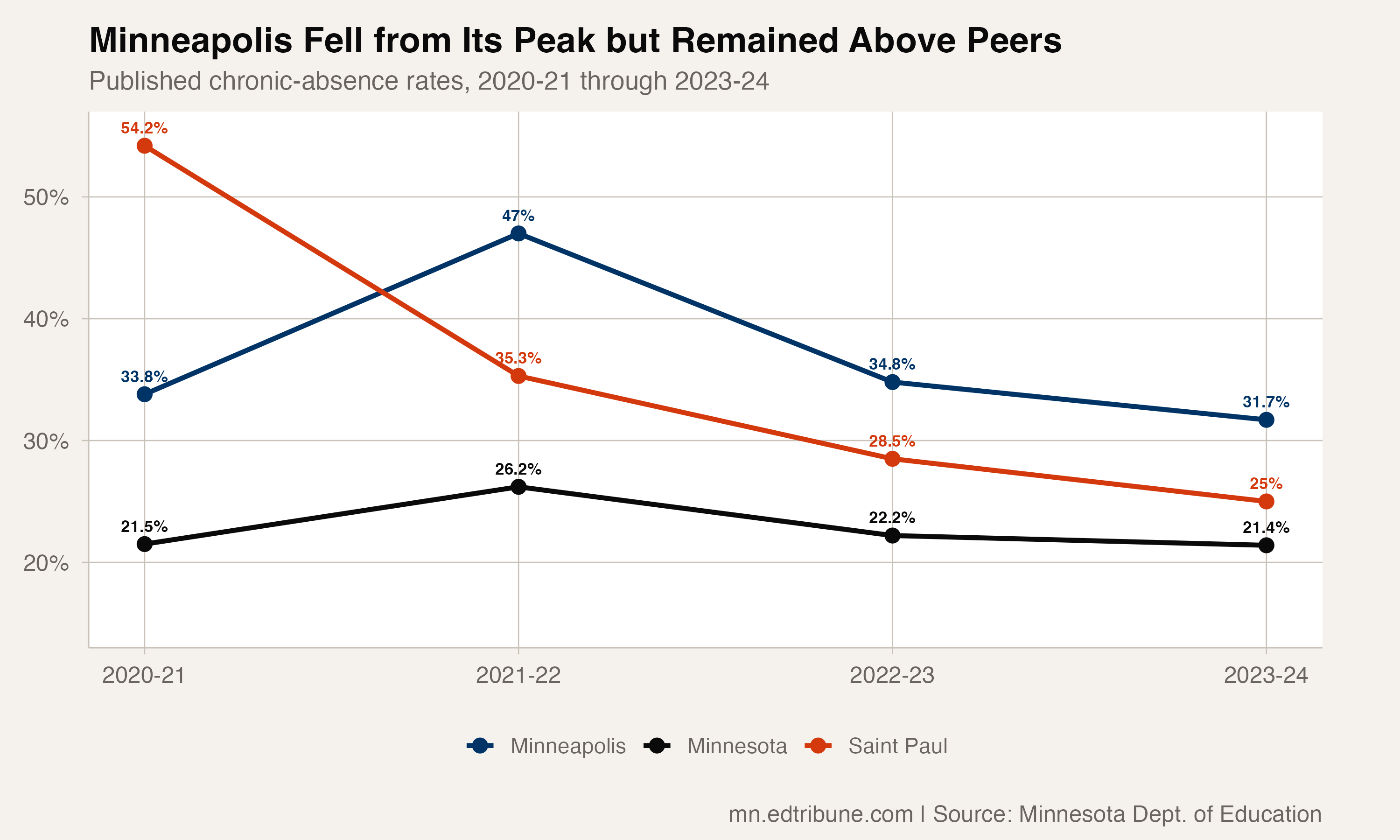
Minneapolis chronic absenteeism peaked at 47.0% in 2021-22 and fell to 31.7% by 2023-24, still 10.3 points above Minnesota.
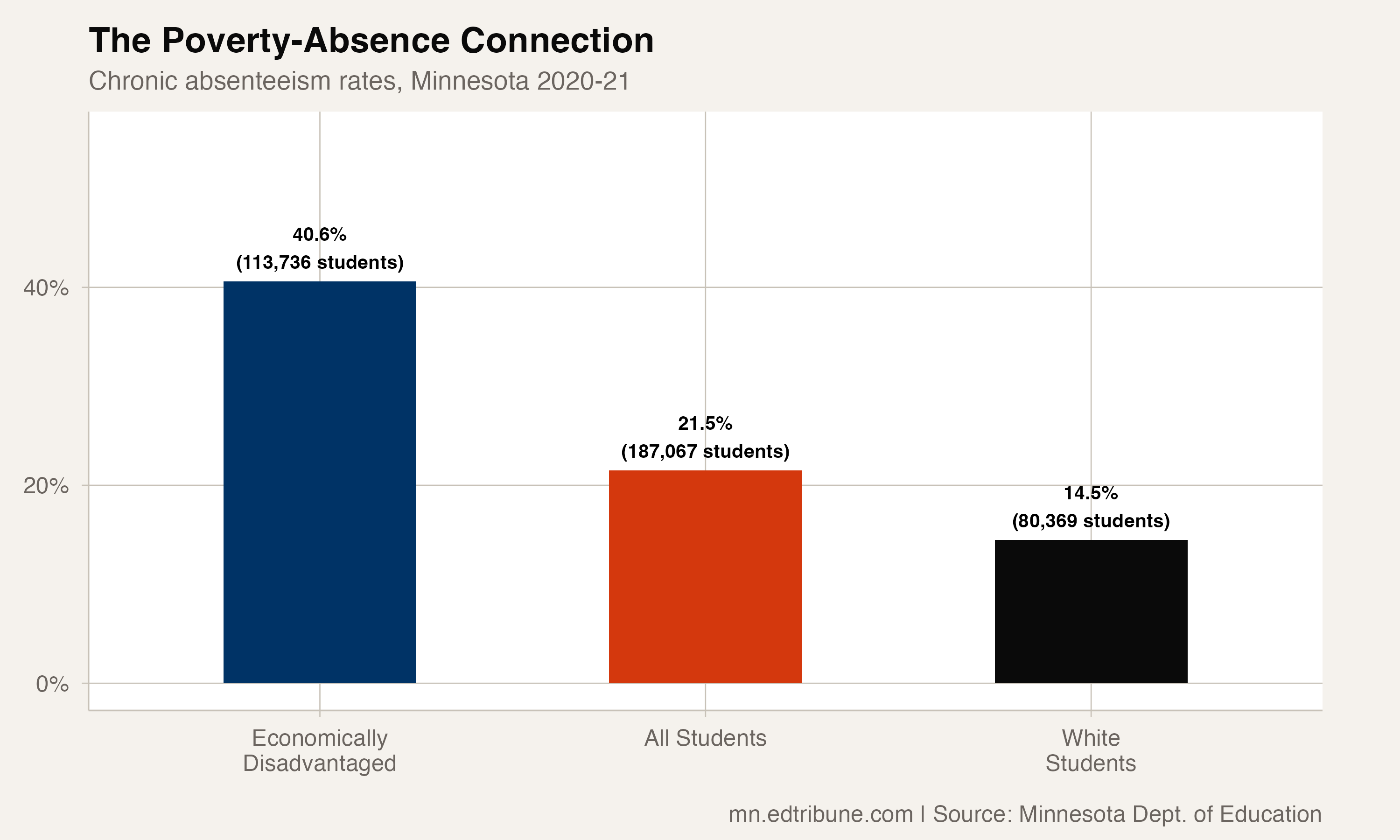
In 2020-21, 40.6% of Minnesota students eligible for free or reduced-price lunch were chronically absent, 19.1 points above the statewide rate; subgroup breakdowns are available only for that year.
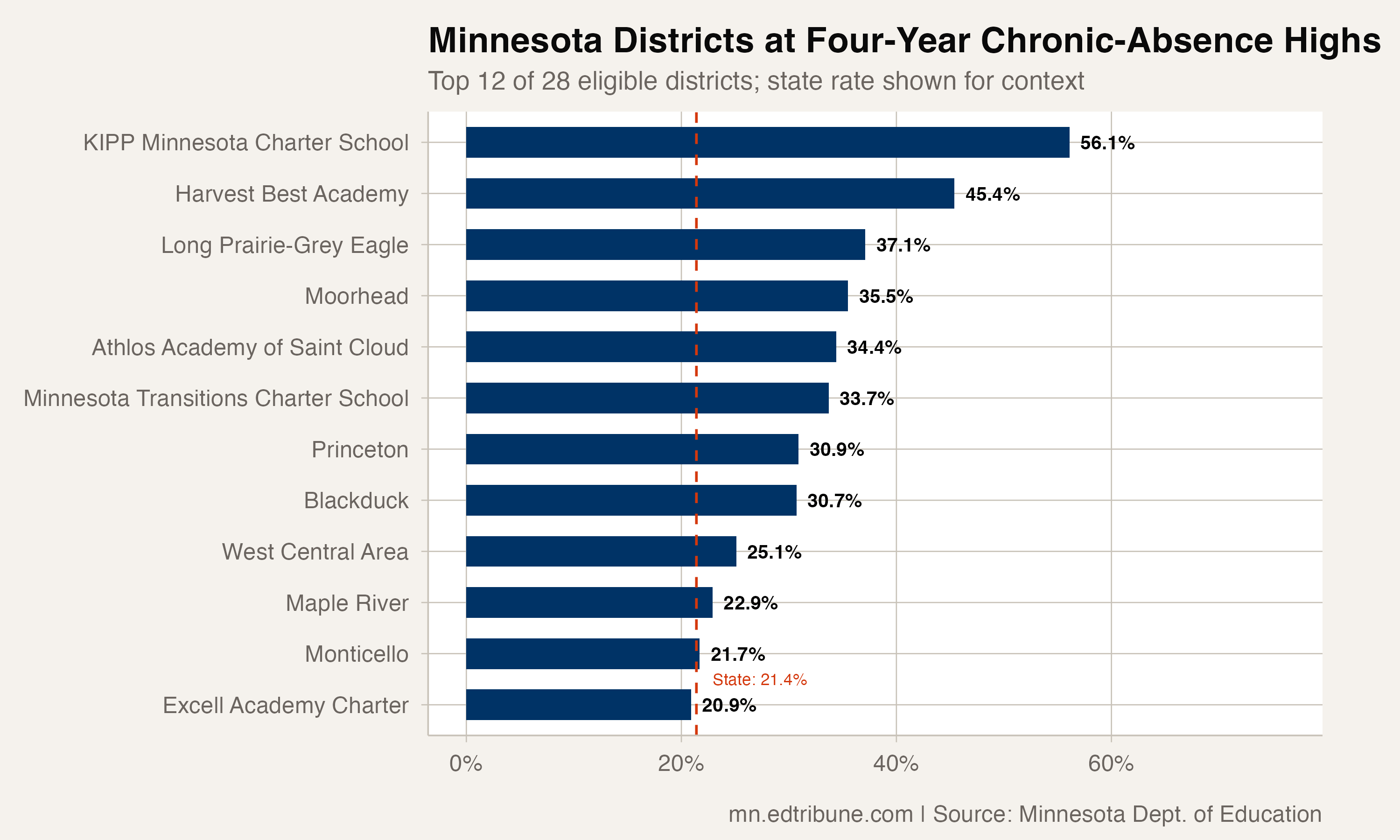
Minnesota's chronic absence rate improved 0.8 points in 2023-24, while 28 of 295 strict four-year-panel districts reached highs.
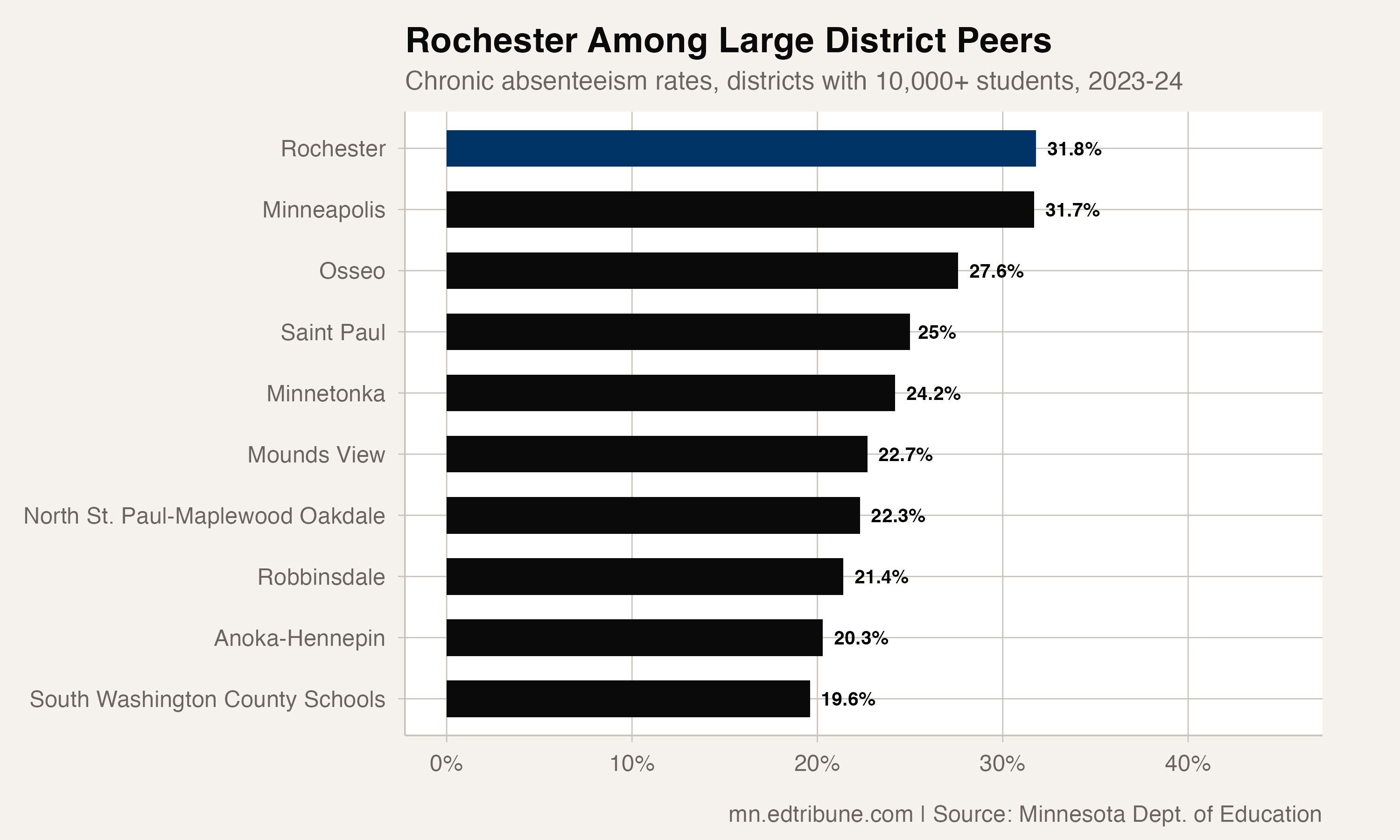
Rochester's chronic-absence rate fell 8.9 points to 31.8%, narrowing its statewide gap while remaining highest among Minnesota districts with at least 10,000 students.
Red Lake Public School District reported a 68.4% chronic absence rate, highest among Minnesota districts with at least 500 students.
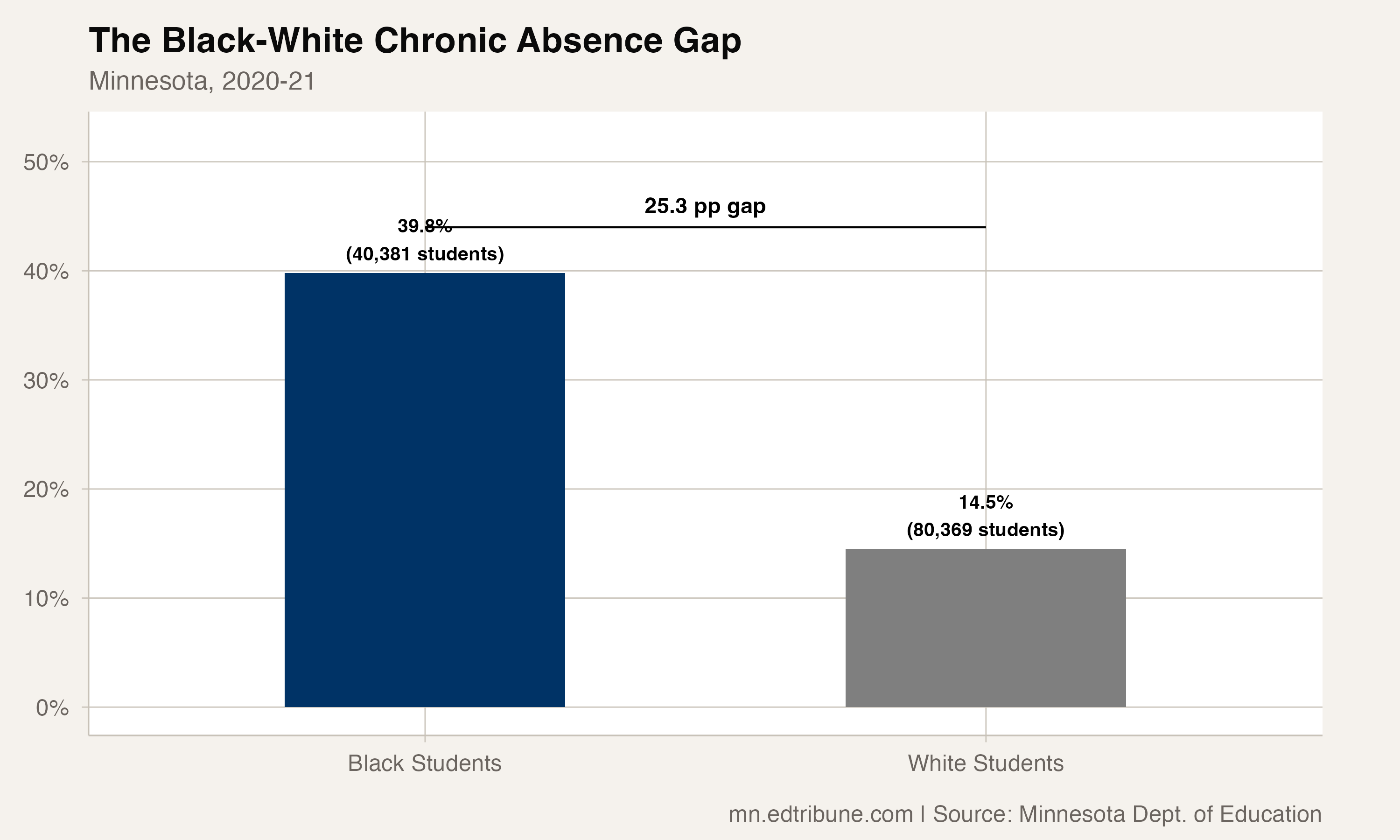
In Minnesota, 40% of Black students were chronically absent compared to 14.5% of white students -- a 25-point gap the state can no longer track because it stopped publishing subgroup data.
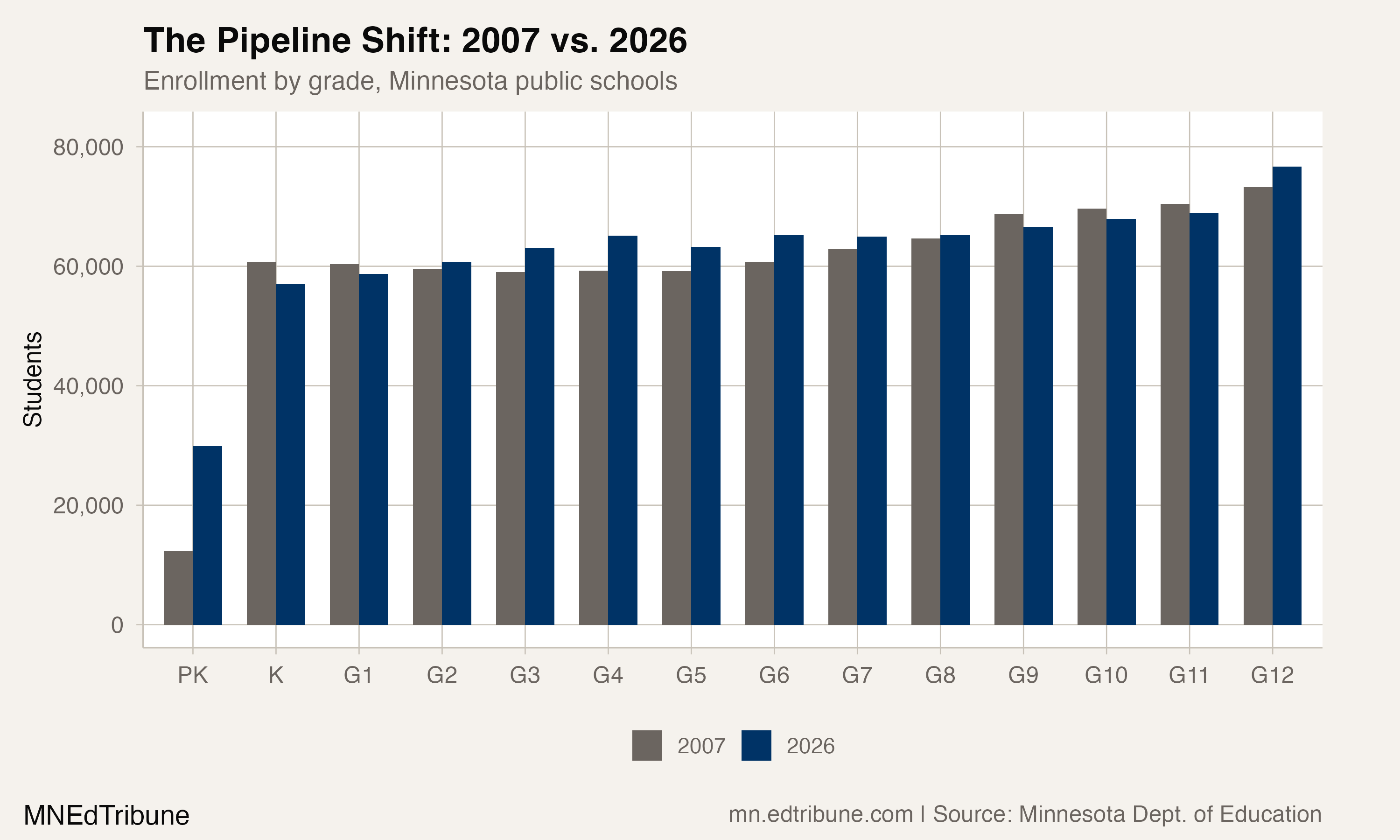
Minnesota hits four simultaneous grade-level records in 2026: all-time high pre-K and 12th grade, all-time low kindergarten and first grade.
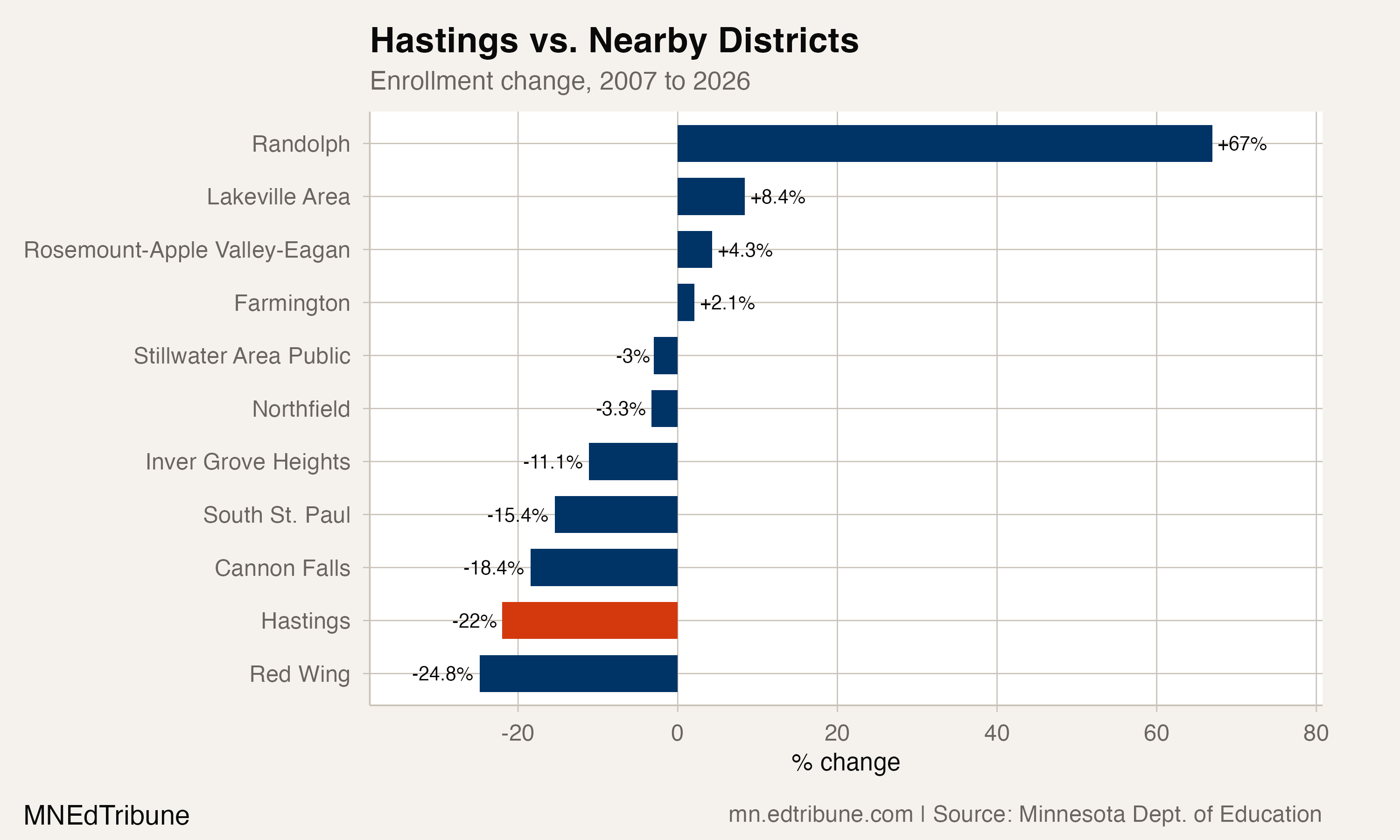
Hastings is the only Minnesota district to decline every single year in the state's dataset. The 19-year streak has erased 1,118 students, 22% of enrollment.
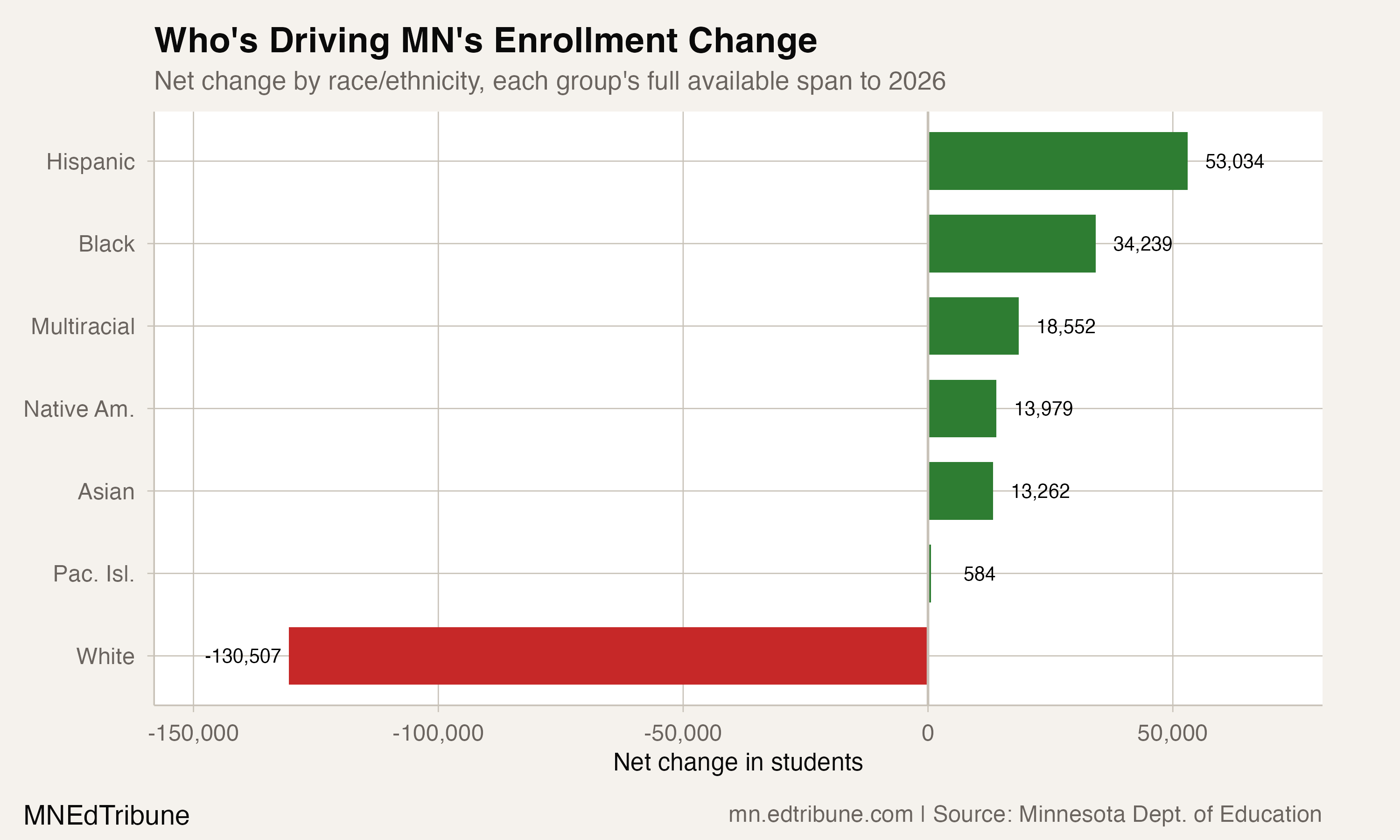
Minnesota lost 130,507 white students since 2007 while every other racial group grew. White decline exceeds the state's entire net enrollment change.
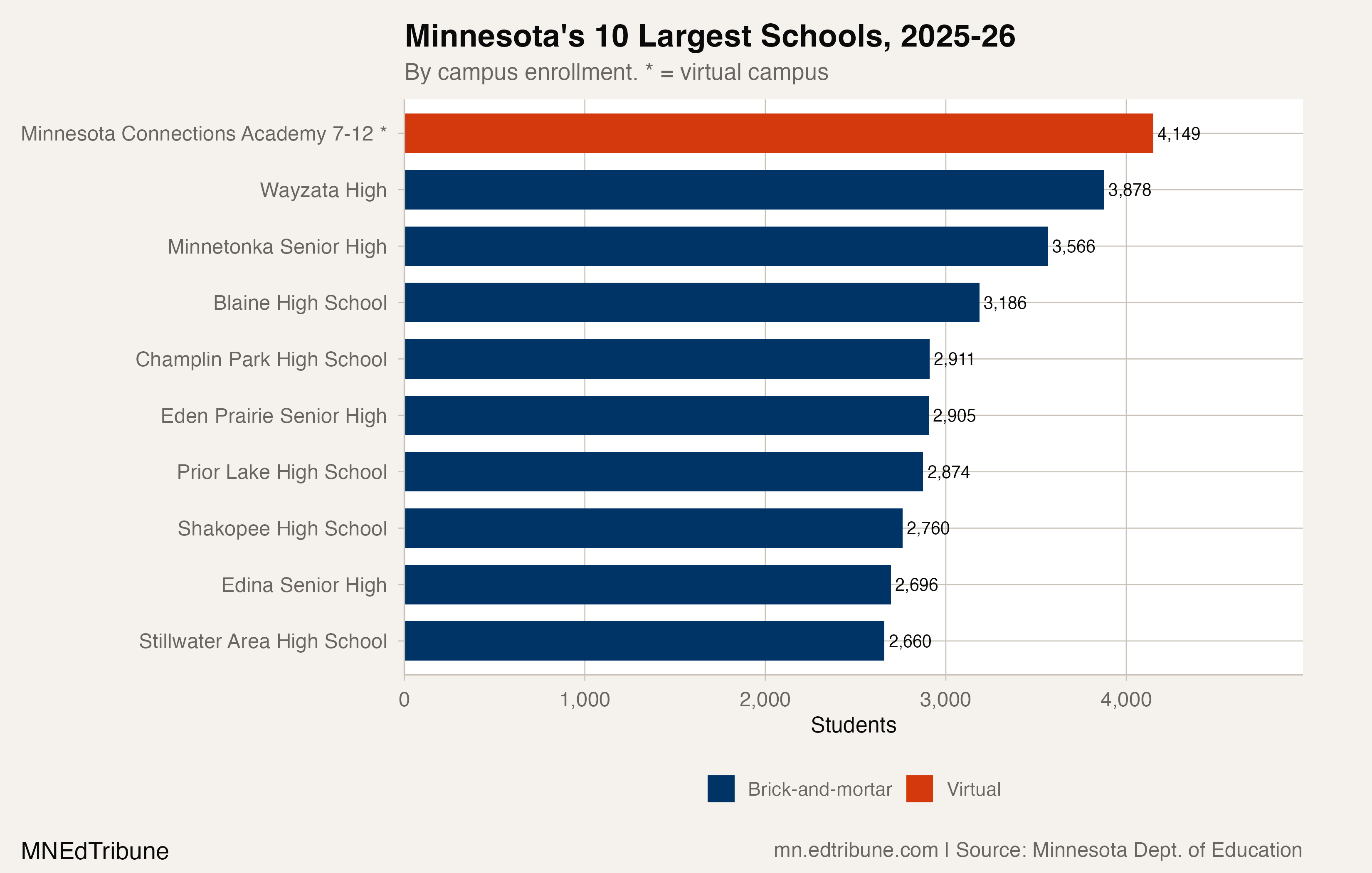
A virtual campus run by Pearson now enrolls more students than any brick-and-mortar school in Minnesota. Online enrollment has tripled since COVID.